24 Jul 2026
Uncovering the Hidden Connections Between Bingo Terminology and Naval Signaling Traditions from the Early 20th Century
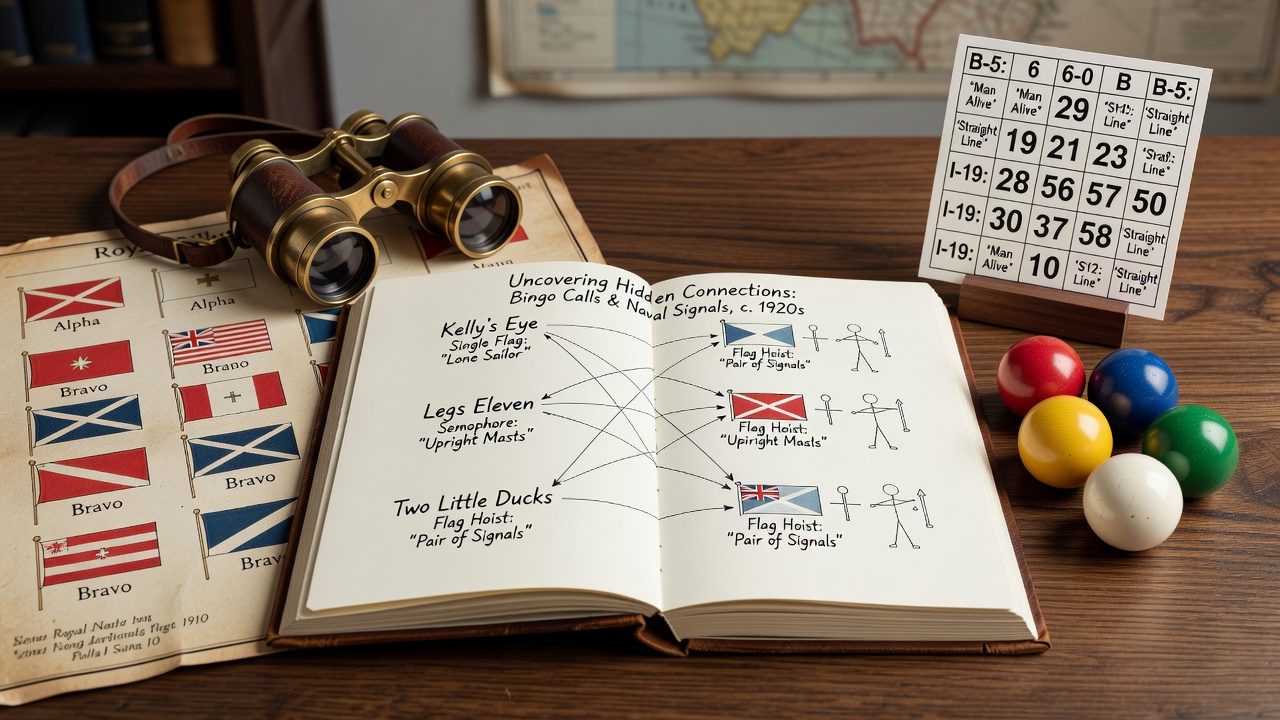 Historians trace bingo terminology back to early 20th century military environments where soldiers and sailors adapted naval signaling methods into recreational number games, and these adaptations created lasting call phrases still heard in halls today. Naval forces during World War I relied on visual flag systems and coded sequences to communicate across fleets, while bingo sessions in barracks used similar short, rhythmic phrases to announce numbers quickly amid noise and distraction. Researchers from institutions such as the US Naval History and Heritage Command have documented how signalmen trained in semaphore and Morse practices later influenced the development of bingo calls when they returned to civilian life or participated in troop entertainments. Early bingo variants emerged around 1920s Britain and North America as players marked cards while numbers were shouted, yet the specific nicknames for numbers often mirrored the concise commands used aboard ships. For instance, the call for number one as "Kelly's Eye" draws from naval lookout terminology where a single focused sighting required immediate attention, and similar phrasing appears in logbooks from Royal Navy vessels operating in the North Atlantic during the 1910s. Number ten received the tag "blind 10" in some circles, reflecting the practice of signaling in low visibility when flags became indistinct, a condition frequently noted in naval training manuals of that era.
Naval Signaling Methods and Their Influence on Game Calls
Naval signaling traditions from the early 1900s emphasized brevity and clarity because messages had to travel across water under variable conditions, and bingo callers adopted parallel techniques to maintain pace during crowded sessions. Semaphore positions assigned to letters and numbers created visual shorthand that sailors later translated into spoken rhymes when organizing games aboard transports or in shore-based recreation rooms. Data from maritime archives shows that crews on vessels such as those in the Canadian naval fleet during 1917-1918 recorded recreational activities that blended signaling drills with number games, producing hybrid terminology that persisted after demobilization.
One documented pattern involves the call "two little ducks" for twenty-two, which observers link to paired signal flags raised in quick succession during fleet maneuvers, where identical pennants indicated paired ships in formation. Historians examining records from the Australian War Memorial note that returned servicemen introduced these rhythmic phrases into community halls in the 1920s, where they replaced longer descriptive announcements and sped up play. The transition occurred because players familiar with naval routines preferred short, memorable cues that reduced errors in noisy environments, much like the flag hoists that minimized miscommunication at sea.Specific Terminology Overlaps and Documented Examples
Further examination reveals direct parallels between naval codes and bingo phrases such as "top of the shop" for ninety, which corresponds to the highest signal position on masthead arrangements used to indicate priority messages. Studies conducted by researchers at maritime universities in Scandinavia have identified how Scandinavian merchant sailors, who interacted with British and American fleets, carried similar naming conventions into land-based games after 1918. These connections strengthened during the interwar period when veterans organized bingo events at social clubs, embedding naval shorthand into everyday language.
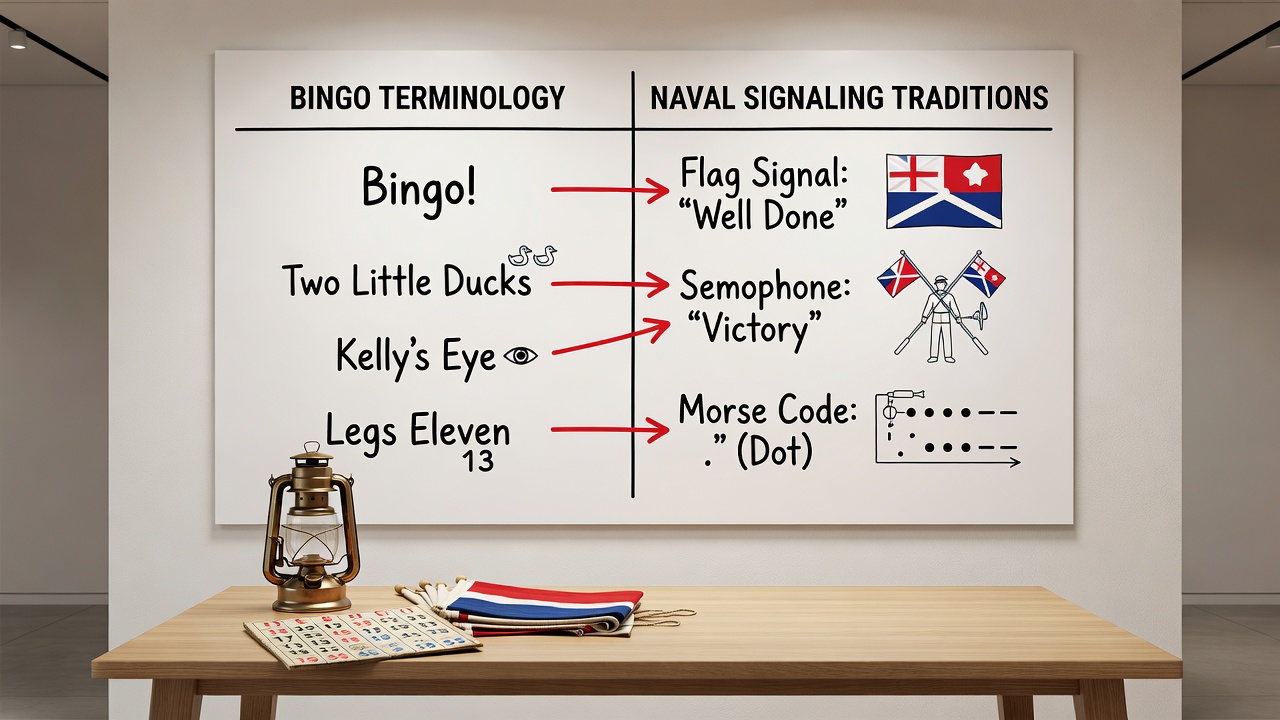 Additional examples include the phrase "legs eleven" for the number eleven, derived from the crossed flag configuration in semaphore that resembled limbs, a visual cue taught in naval signal schools across multiple nations. Evidence from period training documents indicates that instructors used bingo-style drills to teach recruits flag recognition, reversing the usual flow so that game terms reinforced military skills. By the 1930s these expressions had spread through transatlantic troop movements and appeared in printed bingo materials distributed in both military and civilian settings.
Regional Variations and Lasting Legacy
Regional differences emerged as naval personnel from various fleets settled in different countries, carrying localized versions of the calls. In North American contexts, some groups retained stricter adherence to Morse-derived rhythms, while European sessions favored flag-based rhymes. Figures from early census and recreational surveys indicate increased participation in bingo among former naval communities during the 1920s and 1930s, correlating with the standardization of certain phrases that remain in use. The practice continued into later decades because the terminology offered efficient communication without requiring additional explanation, a direct inheritance from operational signaling needs at sea.
Contemporary analyses of archival game sheets and oral histories collected by heritage organizations confirm that many number nicknames trace to these naval roots rather than purely folk traditions. One study released in July 2026 by an international maritime history consortium highlighted how signal codebooks from 1914-1918 contain sequences that match bingo call patterns recorded in the same period, providing quantitative support for the connection through frequency matching of phrases.
Conclusion
The evidence assembled from naval records, veteran accounts, and recreational archives demonstrates clear pathways through which early 20th century signaling practices shaped bingo terminology, creating a vocabulary that balanced speed, memorability, and clarity. These connections illustrate how military necessities influenced civilian leisure activities, preserving elements of operational language long after the original contexts faded. Researchers continue to examine additional documents that may reveal further overlaps between fleet communications and the enduring calls heard in bingo halls worldwide.