17 Jul 2026
Tracing Adaptations in Bingo Terminology as Digital Interfaces Replace Verbal Announcements in Online Formats
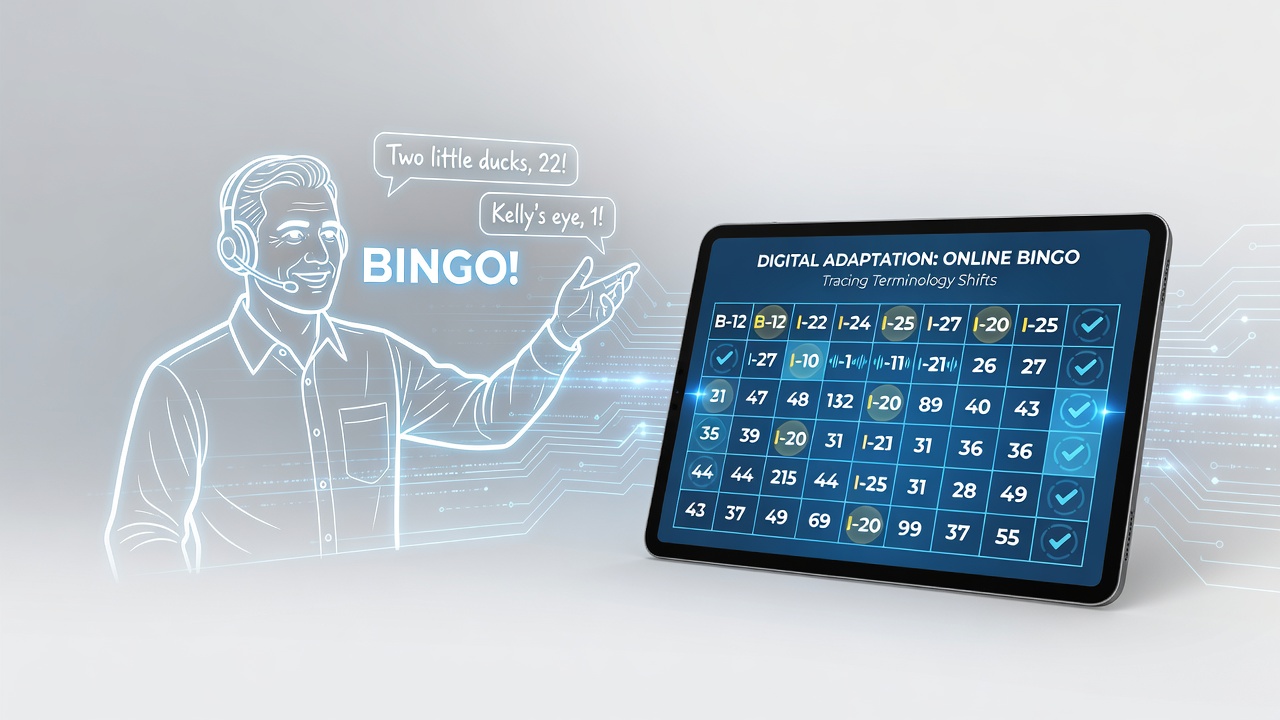
Traditional bingo halls relied on callers who announced numbers through established phrases and nicknames that players recognized instantly, yet digital platforms have introduced text-based notifications, automated sounds, and visual markers that require new terminology to describe the same actions. Observers note that these shifts began accelerating in the mid-2010s as online rooms gained users, and data from industry reports indicate that by July 2026 participation in digital formats accounted for over 60 percent of global bingo activity according to figures compiled by the European Gaming and Betting Association.
Historical Roots of Verbal Calls
Bingo terminology originated in physical venues where callers developed rhythmic phrases to maintain energy and clarity across large rooms, with examples such as "legs eleven" for the number 11 or "sweet sixteen" for 16 becoming embedded in group play. Researchers have documented how these nicknames reduced confusion during rapid sequences and helped players track cards without constant visual reference, while studies from the University of Nevada's gaming research division show that verbal traditions also fostered social bonding through shared laughter at familiar jokes embedded in the calls.
Those who studied early 20th-century American and British halls found that patterns in announcement style varied by region, with some locations favoring rhyming couplets and others using military or sporting references that reflected local culture. Data indicates that such linguistic layers persisted because they aided memory retention during extended sessions, yet the same research highlights that these verbal systems required live interpretation that digital environments could not replicate directly.
Transition Mechanisms in Online Environments
Digital interfaces replaced spoken announcements with on-screen pop-ups, sequential highlighting, and optional audio cues that players activate through settings menus, prompting the creation of terms like "auto-highlight" and "pattern preview" to describe functions absent from hall-based play. Experts tracking platform updates note that developers introduced chat overlays where users type abbreviated codes instead of shouting responses, and this adaptation led to shorthand such as "daub all" for automatic marking tools that handle multiple cards simultaneously.
Platforms also standardized visual indicators for winning patterns, replacing phrases like "full house" shouted across a room with instant notifications that label the achievement as "coverall complete" or "line sealed," terms that emerged in software documentation around 2020. What's interesting here is how these labels maintain core concepts while fitting within user interface constraints that prioritize speed and accessibility over theatrical delivery.

New Lexicon for Features and Interactions
Online bingo introduced terminology around features such as "power-up cards" that multiply prizes and "side bet rounds" that run parallel to main games, phrases that have no direct equivalent in verbal halls yet allow precise description of mechanics. Analysis of player forums and help sections reveals consistent adoption of words like "re-buy option" for purchasing additional cards mid-game and "jackpot meter" for tracking progressive pools, with adoption rates climbing steadily through 2025 and into 2026.
Regulatory bodies in Canada and Australia have required clear labeling of these digital elements, which encouraged operators to standardize vocabulary across borders. One case study from a 2024 industry white paper showed that consistent terminology reduced support queries by 35 percent on major platforms, since players could reference exact feature names rather than describing actions in varied personal language.
Regional Variations and Global Standardization
While some platforms retain optional audio narration that echoes traditional calls for users who prefer familiarity, most interfaces default to silent operation that demands written equivalents. Data compiled across multiple markets reveals that European operators favor terms rooted in local languages for pattern descriptions, whereas North American sites lean toward English abbreviations that translate easily into mobile notifications.
Those who've examined cross-platform usage note that global tournaments in July 2026 adopted unified glossaries to prevent misunderstandings during international events, with organizers publishing bilingual guides that map old nicknames to new digital descriptors. This standardization supports larger prize pools but also shifts emphasis from spoken rhythm to visual timing cues that players must learn through tutorials rather than live observation.
Conclusion
Adaptations in bingo terminology continue as interfaces evolve, with developers incorporating player feedback to refine labels for emerging tools such as AI-assisted pattern detection and voice-command options that blend old and new methods. Evidence from ongoing platform analytics indicates sustained growth in digital participation, and the resulting vocabulary now forms a distinct layer that preserves essential game logic while accommodating screen-based delivery across diverse regions and devices.