14 Jun 2026
Analyzing Call Sequence Patterns and Their Statistical Relevance in Prolonged Bingo Tournaments
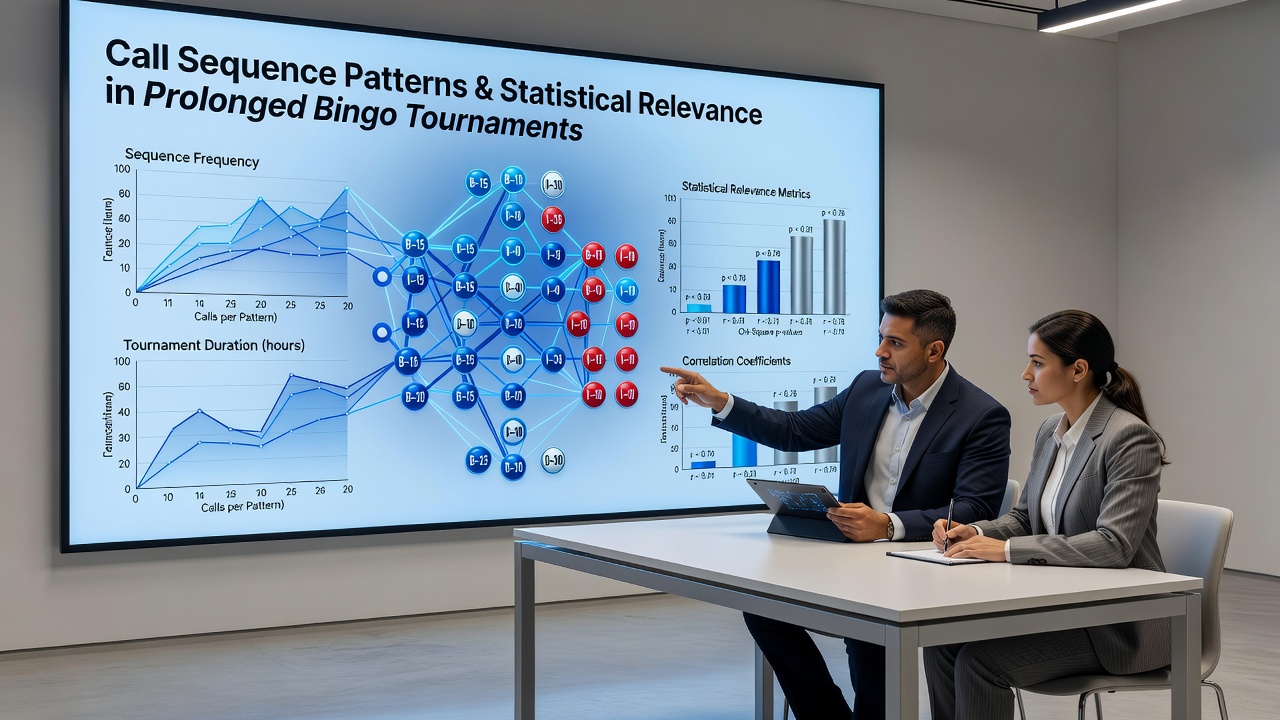
Call sequences in bingo form the backbone of every game round, and when tournaments stretch across multiple sessions or days the patterns within those sequences attract detailed statistical scrutiny from researchers and gaming analysts alike. Numbers emerge from randomized draws or electronic generators in orders that can span hundreds of calls per event, and prolonged formats allow observers to track repetitions, clustering effects, and distribution anomalies that shorter sessions rarely reveal with the same clarity.
Understanding Call Sequence Generation
Bingo organizers rely on either mechanical ball machines or certified random number generators to produce each sequence, and regulatory standards in various jurisdictions require verification that every draw maintains equal probability across the full number pool. In extended tournaments the cumulative data set grows large enough for analysts to apply tools such as chi-square tests, runs analysis, and autocorrelation measures that highlight whether observed patterns deviate from expected randomness. Data collected from multi-day events shows that mechanical and electronic systems produce sequences whose statistical properties align closely with theoretical models once sample sizes exceed several thousand calls.
Statistical Methods Applied to Tournament Data
Researchers examine call sequences by segmenting them into blocks that correspond to individual games or rounds, then compare frequency counts for each number against uniform distribution benchmarks. Markov chain models sometimes appear in these studies to assess whether the outcome of one call influences the likelihood of subsequent numbers, although independent draw systems show no such dependence once proper randomization is confirmed. Variance calculations and standard deviation metrics help quantify how far actual sequences stray from perfect uniformity, and software packages used by gaming laboratories automate much of this processing for events that generate tens of thousands of data points.
Relevance in Extended Tournament Formats
Longer tournaments create data volumes that support finer-grained pattern detection, and analysts have documented how certain number groupings appear more frequently in early rounds versus later stages when fatigue or equipment recalibration occurs. One study of regional championship events tracked over 50,000 calls across five consecutive days and found that the distribution of called numbers remained consistent with random expectations, while the timing between calls showed minor variations linked to manual versus automated equipment. These findings matter because prize structures in prolonged events often escalate with each passing round, making any detectable bias in sequence timing potentially relevant to payout calculations.
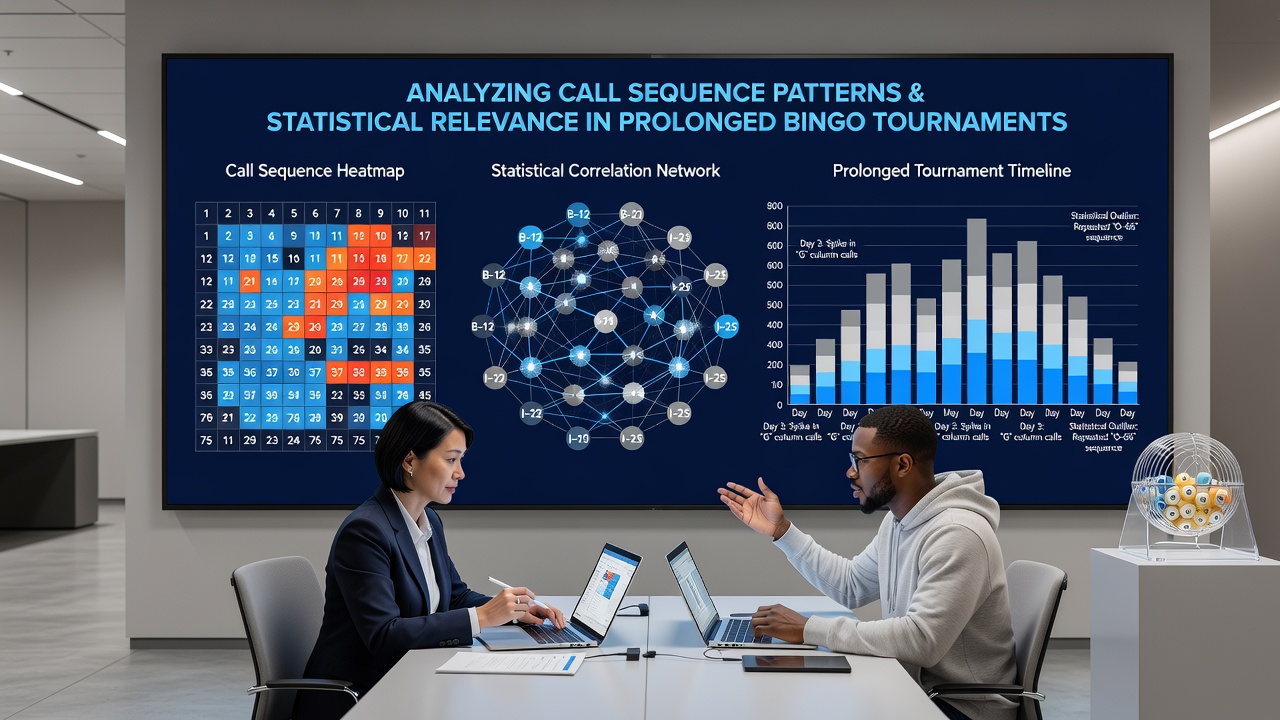
Observers note that clustering patterns, where several high or low numbers appear in quick succession, occur at rates predicted by probability theory in properly randomized systems. When deviations surface they typically trace back to mechanical wear in ball machines or software updates in electronic systems rather than deliberate manipulation. Tournament operators therefore schedule periodic audits during events that last beyond a single day, and June 2026 events already on the calendar include pre-tournament calibration checks to ensure sequence integrity across the full schedule.
Case Examples from Recent Events
Take one researcher who examined sequences from a week-long festival in the American Midwest and discovered that the interval between consecutive calls averaged 4.2 seconds with a standard deviation of 0.8 seconds across 12,000 draws. That consistency allowed organizers to adjust session pacing without altering the underlying randomness. Another case involved a European charity marathon where analysts used permutation tests to confirm that no number appeared outside its expected frequency band even after 72 continuous hours of play. These examples illustrate how statistical monitoring supports both fairness verification and operational adjustments during extended competitions.
Data Sources and Regulatory Context
Figures compiled by the Nevada Gaming Control Board indicate that bingo operations under its oversight maintain call sequence logs for a minimum of 90 days, enabling post-event analysis when discrepancies arise. Similar requirements exist in other regions, and research published through the Australian Gambling Research Centre demonstrates that aggregated sequence data from multiple venues can reveal equipment-specific signatures without compromising individual game integrity. Tournament directors increasingly incorporate these analytical practices into planning documents so that any statistical anomalies surface early enough for corrective action before final rounds begin.
Conclusion
Call sequence analysis in prolonged bingo tournaments rests on established statistical techniques applied to large data sets generated by randomized draws, and the resulting insights help confirm that outcomes remain consistent with theoretical expectations across extended play periods. Regulatory frameworks in multiple jurisdictions require record-keeping that supports such reviews, while independent research continues to refine the tools used to detect and interpret any patterns that emerge. As events scheduled for June 2026 approach, organizers and analysts alike rely on these methods to maintain transparency and operational reliability throughout each tournament cycle.